
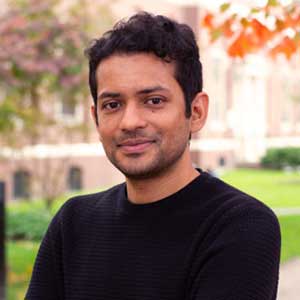
Dhananjay Bambah-Mukku, PhD
Dr. Dhananjay “DJ” Bambah-Mukku is an Assistant Professor of Psychology at the University of California, San Diego. He earned his Ph.D. in Neuroscience at Mount Sinai/NYU in 2013 and completed his postdoctoral fellowship in Catherine Dulac’s laboratory at Harvard University in 2021.
His research investigates the neural and molecular mechanisms underlying social behaviors such as mating, parenting, and aggression, with a focus on how biological factors like sex, age, and physiological state shape behavior. His lab integrates single-cell and spatial transcriptomics with genetic, behavioral, and systems neuroscience approaches, and also uses comparative studies in mice and naked mole rats to explore evolutionary flexibility of neural circuits. Dr. Bambah-Mukku has published in leading journals including Science, Cell, and eLife, and his innovative work has been recognized with major awards, including the NIH Director’s New Innovator Award, an NIH K99/R00 Pathway to Independence Award, a Whitehall Foundation Fellowship, and a Kavli Institute for Brain and Mind Research Grant.

Claudia Lugo Candelas, PhD
Dr. Claudia Lugo-Candelas, Ph.D. is a licensed clinical psychologist and Associate Professor of Medical Psychology at Columbia University, where she holds both the Bender-Fishbein Scholar in Child and Adolescent Psychiatry and the Florence Irving Associate Professor of Medical Psychology (in Psychiatry) titles. Her research centers on the perinatal programming of risk and resilience for psychiatric disorders, with a particular focus on the role of perinatal sleep in the development of inhibitory control difficulties that elevate risk for childhood psychopathology.
Dr. Lugo-Candelas is dedicated to advancing scientific understanding of the environmental exposures and lived experiences most relevant to minoritized, underserved, and underrepresented communities. She firmly upholds that diversity and equity are foundational to rigorous science and public health advancement.
She earned her B.A. from the University of Puerto Rico, Río Piedras, and her Ph.D. in Clinical Psychology from the University of Massachusetts Amherst. She completed her postdoctoral fellowship in the Division of Child and Adolescent Psychiatry at Columbia University.
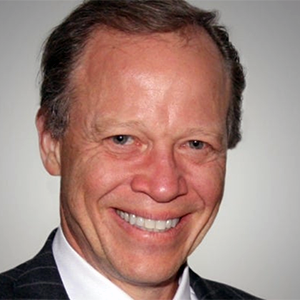
Robert Friedlander, MD, MA
Robert Friedlander, MD, MA, is the Walter E. Dandy Distinguished Professor and Chair of Neurological Surgery at the University of Pittsburgh and Co-Director of the UPMC Neurological Institute. A neurosurgeon and neuroscientist of international recognition, Dr. Friedlander was previously a faculty member at Harvard Medical School and Brigham and Women’s Hospital.
He is a member of the National Academy of Medicine, the American Society for Clinical Investigation, and the Association of American Physicians. His research on apoptosis and neurodegeneration has been published in Nature, Science, Nature Medicine, PNAS, and other leading journals, and has received continuous NIH funding for over two decades.
Clinically, he specializes in complex cerebrovascular surgery, brain tumors, and Chiari malformations. He has held leadership roles across national neurosurgical organizations, including the Society of Neurological Surgeons and the Congress of Neurological Surgeons.
Born in Caracas, Venezuela, Dr. Friedlander completed his MD at Harvard Medical School and neurosurgical training at Massachusetts General Hospital.
For over two decades, he has had continuous NIH support as a principal investigator, as well numerous foundation awards, and his areas of interest include: Aneurysms, vascular malformations, brain tumors, carotid disease, cerebrovascular disease, Chiari malformation, spinal cord tumors. Research focuses on mechanisms of apoptosis, Huntington’s disease, ALS, and stroke.
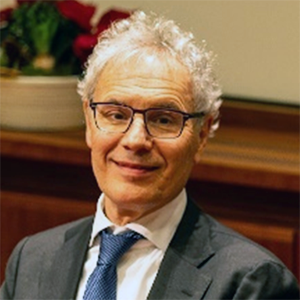
Victor Ambros, PhD
Victor R. Ambros, Ph.D. is a developmental biologist renowned for discovering the first microRNA (miRNA), a breakthrough that revolutionized understanding of gene regulation. Born in New Hampshire and raised in Vermont, he completed both his B.S. (1975) and Ph.D. (1979) in Biology at the Massachusetts Institute of Technology, training under Nobel Laureate David Baltimore. He later conducted postdoctoral research with H. Robert Horvitz, another future Nobel Laureate, at MIT.
Dr. Ambros joined the faculty at Harvard University in 1984, later moving to Dartmouth College in 1992. Since 2008, he has been a professor at the University of Massachusetts Chan Medical School, where he holds the Silverman Professorship of Natural Sciences, recognizing both his scientific excellence and mentorship. His landmark 1993 discovery of microRNA in C. elegans, in collaboration with Rosalind Lee and Rhonda Feinbaum, revealed a new class of small non-coding RNAs that regulate gene expression at the post-transcriptional level.
For his pioneering work, Dr. Ambros has been elected to the National Academy of Sciences (2007) and the American Academy of Arts & Sciences (2011). In 2024, Dr. Ambros was awarded the Nobel Prize in Physiology or Medicine for the co-discovery with Gary Ruvkun of microRNA—small single-stranded RNA molecules, now recognized as key regulators of gene expression at the post-transcriptional level.