Department of Anesthesiology Residency Program
The Department of Anesthesiology offers a four-year residency program designed to train physicians as consultants in anesthesiology and prepare them for the challenges of a lifelong career in this exciting field. The program’s goal is to develop superior anesthesiologists who are competent, confident, and capable of managing any clinical scenario.
Clinical Base Year (PGY-1)
The Clinical Base Year (CBY) provides residents with a broad foundation of medical knowledge and clinical experience essential for advanced training. This year is both challenging and rewarding, with rotations including:
Anesthesia: 1 month
Emergency Medicine: 1 month
Family Medicine: 1 month
General Surgery: 1 month
Internal Medicine: 1 month
Medical Intensive Care Unit (MICU): 1 month
Obstetrics/Gynecology: 1 month
Otorhinolaryngology (ENT): 1 month
Pediatrics: 1 month
Trauma Stabilization Unit: 1 month
Trauma Intensive Care Unit (TICU): 1 month
Vacations: 1 month
Through the clinical knowledge and skills developed during PGY-1 rotations, residents build the foundation needed to approach the USMLE Step 3, preparing them to complete the examination and advance confidently to PGY-2.
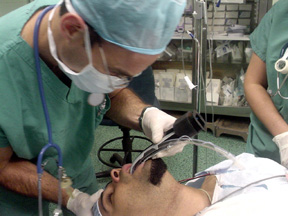
Clinical Anesthesiology (CA1-3 / PGY2-4)
The Clinical Anesthesiology program encompasses the CA-1 through CA-3 years which progressively build clinical and academic expertise:
CA-1: Begins with the Introduction to Anesthesiology Curriculum, which combines supervised clinical training with academic and practical sessions to establish the fundamentals of safe patient care. Subspecialty rotations start mid-year under the guidance of highly trained faculty.
CA-2: Focuses on strengthening technical expertise, clinical judgment, and independent decision-making.
CA-3: Provides flexibility and advanced training with emphasis on caring for critically ill patients. Residents gain extensive experience in subspecialties such as operating room management, transesophageal echocardiography, and neuromonitoring. A six-month research track is available for residents interested in academic medicine and scientific investigation.
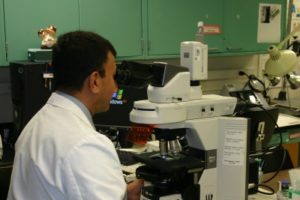
Residents receive structured exposure to a comprehensive range of anesthesiology subspecialties during CA-1 through CA-3. These include:
- Ambulatory Anesthesia
- Cardiac Anesthesia
- General Surgical Service Block Rotations
- Intensive Care Unit Rotations
- Neuroanesthesiology
- Obstetrical Anesthesia
- Orthopedic and Regional Anesthesia
- Pain Management
- Pediatric Anesthesia
- Thoracic and Vascular Anesthesia
This progression ensures that upon completion of the program, residents possess the broad clinical experience and subspecialty expertise required to practice anesthesiology at the highest standard.
The program adheres strictly to the Accreditation Council for Graduate Medical Education (ACGME) Anesthesiology Residency Review Committee requirements.
|
Clinical Training Sites and Facilities
Residents gain diverse experience through rotations at several affiliated institutions:
- University District Hospital (UDH)
- University Pediatric Hospital (HOPU)
- Carolina University Hospital
- San Juan Veterans Administration Hospital
- Cardiovascular Center of Puerto Rico and the Caribbean
- Interventional Pain Clinic, Medical Sciences Campus
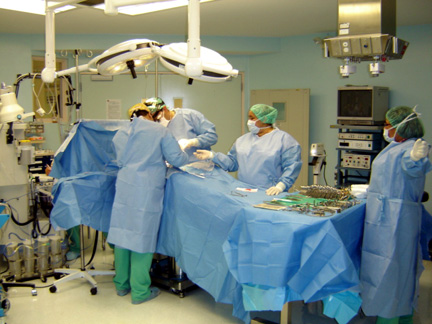
Clinical training occurs across 18 operating rooms at the Puerto Rico Medical Center, as well as additional operating suites at affiliated hospitals. Cardiothoracic anesthesia is taught at the Cardiovascular Center of Puerto Rico and the Caribbean, which houses six ORs, an 18-bed cardiovascular ICU, and a catheterization laboratory, as well as at the San Juan VA Medical Center. The Acute and Interventional Pain Clinic, located on the 5th floor of the Medical Sciences Campus, provides outpatient evaluation and interventional training.
Didactic Program
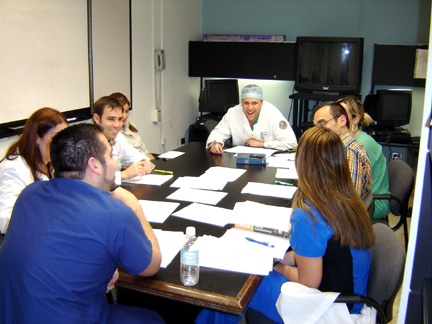
The didactic curriculum integrates lectures, seminars, journal clubs, morbidity and mortality conferences, and hands-on training. Educational activities are held in:
- The 9th floor departmental library (Primary Site)
- The 6th floor amphitheater
- The 9th floor conference room (shared with the Department of Surgery)
- The Experimental Surgery Laboratory (10th floor)
- VA Hospital conference rooms and general library
Additional support is provided by the Medical School Audiovisual Department and Learning Resources Center for simulation, audiovisual preparation, and clinical skills training.
Teaching for medical students on elective or required anesthesia rotations is conducted in Room 545-A of the Medical Sciences building, the Clinical Skills Laboratory, and various anesthetizing locations throughout the affiliated hospitals.