
Objectives
Knowledge Comprehensive Education in Pain Management
Education in Pain Medicine is designed to provide the physician with an extensive foundation in the multidimensional aspects of pain. Instruction begins with the anatomy and physiology of pain perception, followed by an understanding of its epidemiology, economic implications, and sociological impact. Trainees are expected to master the pharmacology of analgesic agents, including opioids, non-narcotic analgesics, non-steroidal anti-inflammatory drugs, and centrally acting medications employed in pain management.
Competency further requires familiarity with the measurement and assessment of pain and functional status, the principles of diagnostic testing, and the concepts underlying neurostimulation, such as transcutaneous electrical nerve stimulation (TENS), peripheral nerve stimulation (PNS), and dorsal column stimulation (DCS). Training also includes instruction in regional anesthesia techniques, neurolytic interventions, and intrathecal catheters and infusion systems, as well as exposure to alternative pain therapies.
Physicians are expected to develop proficiency in interventional and invasive pain management techniques, with emphasis on the appropriate indications, contraindications, and post-procedural follow-up. Specific modalities include intradiscal electrothermal therapy (IDETT), spinal cord stimulators, intrathecal pumps, vertebroplasty, and kyphoplasty. The curriculum also emphasizes the importance of a multidisciplinary and multimodal approach, incorporating cognitive, behavioral, and supportive psychotherapeutic strategies, rehabilitation, and coordinated team-based care.
Equally important is the ability to distinguish the clinical characteristics of acute, chronic, and cancer-related pain, and to appreciate the unique role of the Pain Medicine physician as consultant. Training also addresses sex- and gender-specific differences in pain presentation and management across the lifespan, including pediatric and adult populations.
The clinic further incorporates the evaluation and treatment of patients involved in worker’s compensation and disability claims, including the assignment of impairment ratings. To ensure well-rounded preparation, physicians receive instruction in the principles of quality pain management, which necessitate not only a solid foundation of medical knowledge and technical skill but also the development of professionalism and bedside manner. Finally, exposure to the appropriate billing and coding practices for medical evaluations, treatments, and interventional procedures equips physicians with the practical tools necessary for clinical practice.
Exposure and Knowledge Requirements in Pain Medicine
| Category | Procedures / Activities |
| Clinic & Patient Care | Clinic visits for prescription refills; Clinic visits for continuity of care; Follow-up visits for post-surgical or interventional pain management (IPM) procedures; Removal of sutures or staples; Consultations, letters, and conferences; Telephone call backs; Examination and re-evaluation of acute pain flares |
| Neurostimulation & Implantable Devices | Trial and permanent spinal cord stimulator (SCS) placement; Subcutaneous cervical stimulator; Sacral stimulating catheter placement; Peripheral nerve stimulator placement; Interrogation of spinal cord and peripheral nerve stimulators; Repositioning of SCS electrode leads; Replacement of malfunctioning SCS and morphine pumps |
| Intrathecal and Morphine Pumps | Morphine pump refills; Permanent morphine pump placement |
| Epidural & Spinal Procedures | Cervical, thoracic, lumbar, and caudal epidural catheter placements; Cervical epidural steroid injection; Thoracic epidural steroid injection; Lumbar epidural steroid injection; Lumbar transforaminal epidural steroid injection; Caudal steroid injection; Epidural lysis of adhesions; Spinal canal endoscopy |
| Nerve Blocks (Peripheral & Sympathetic) | Brachial plexus block; Stellate ganglion block; Celiac plexus block and denervation; Lumbar sympathetic block; Superior hypogastric plexus block; Splanchnic nerve block and denervation; Sphenopalatine ganglion block and neurolysis; Trigeminal ganglion block and neurolysis; Ganglion of impar block; Intercostal nerve block; Suprascapular nerve block; Occipital (greater & lesser) nerve block; Selective nerve root and dorsal root ganglion block |
| Joint & Musculoskeletal Injections | Facet joint injections and medial branch block (cervical/thoracic/lumbar); Sacroiliac joint steroid injection; Piriformis injection; Psoas and quadratus lumborum muscle injection; Trigger point injections |
| Advanced Interventional Procedures | Radiofrequency denervation; Lumbar radiofrequency neurotomy; Intradiscal electrothermal therapy (IDET); Discography; Percutaneous discectomy; Nucleoplasty; Dekompressor; Vertebroplasty |
| Adjunct & Alternative Therapies | Acupuncture; Botox injections for pain; Occasional minimally invasive procedures |
| Post-Procedure & Device Management | Removal of trial stimulating catheters |
Clinical and Educational Responsibilities
Physicians assigned to the Pain Medicine Rotation are expected to participate fully in the daily operations of the Pain Clinic, Monday through Friday. Each week, one physician is designated to cover the Acute Pain Service. The designated physician assumes responsibility for carrying the service cellphone for inpatient consults, which typically involve the evaluation and proper documentation of a limited number of patients (generally fewer than 10 consults per week).
In parallel with clinical responsibilities, physicians are required to engage in the program’s structured educational activities. These include attendance at Pain Medicine lectures and Journal Club ., as well as participation in Anesthesiology departmental lectures, Journal Club, and Morbidity and Mortality conferences. Physicians will also contribute to the academic mission of the program by preparing and delivering educational sessions. Each physician is expected to present a formal lecture on a monthly basis to attending faculty, residents, and medical students. Furthermore, physicians are assigned a case presentation every other month to be presented at the Pain Medicine conference.
Call Responsibilities
Each week, one physician is designated to cover the Acute Pain Service (24 hours / 7 day-week) . The assigned physician is responsible for carrying the service cellphone for inpatient consults, which typically involve the evaluation and proper documentation of a limited number of patients (generally fewer than 10 consults per 7-day week).
The service primarily addresses acute postoperative pain management, including the use of patient-controlled analgesia (PCA) devices and epidural infusions, but also encompasses chronic pain consultations. Acute pain consultations must be attended to promptly (within 6-8 hours) , prioritizing patients with flail chest, who require immediate evaluation. In contrast, chronic pain consultations may be deferred for up to 24 hours, provided that patient safety is not compromised.
All patients must be presented to the attending physician. When a resident is assigned the cellphone, the resident is expected to contact the designated pain physician, who will then review the case with the attending.. Additionally, this physician is responsible for returning patient phone calls in the afternoon, addressing any clinical questions or concerns that arise.
Pain Clinic Responsibilities
Physicians are expected to be present at the Pain Clinic by 7:00 a.m. Clinic hours extend until approximately 3:00 p.m. from Mondays to Fridays.
The dress code for clinic activities can be either scrubs or business casual attire.
Physicians are expected to evaluate new patients comprehensively, including a detailed history, physical examination, and review of relevant imaging. Based on these findings, the physician must formulate a treatment plan and discuss it with the attending physician for approval and guidance.
As part of the teaching mission, physicians will directly supervise residents and medical students assigned to the service. Lectures are assigned on a weekly basis, covering topics in both acute and chronic pain management.
Rotations
Although most of the Clinical Rotation occurs at the Pain Clinic, physicians may also rotate through affiliated institutions to broaden clinical exposure. These rotations include:
- Spine Center: A one-month rotation focusing on advanced spine-related pain interventions.
- Veterans Administration Hospital (VAH) Physical Medicine and Rehabilitation Pain Clinic: A one- to two-month rotation, consisting of two days per week, dedicated to multidisciplinary approaches in pain medicine.
These external rotations provide additional opportunities for exposure to diverse patient populations and management strategies, complementing the core experience within the Pain Clinic.
Faculty
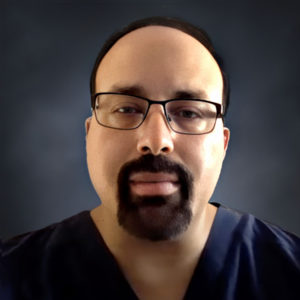
Francisco Lebrón-Arzón, MD
Director, Interventional Pain Management
Professor
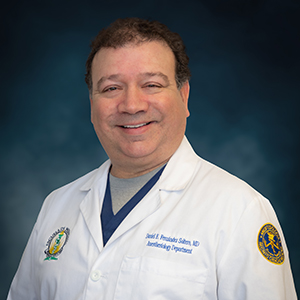
Daniel Fernández, MD
Intervational Pain Management Pain
Professor
Current International Physicians
Dr. Dominga Garcia (Senior)
Dr. Humberto Roiz
Dr. Daniel Bustamante
Qualifications and Application Requirements
Applicants to the Pain Medicine Clinical Rotation must meet the following criteria:
- Successful completion of an Anesthesiology Residency Program.
- Fluency in Spanish, both written and spoken, is required. Proficiency in English is not mandatory but is strongly recommended.
- Demonstrated interest in Pain Medicine and Interventional Techniques.
- A clearly defined plan for professional development and career advancement following completion of the Pain Medicine Clinical Rotation.
- Submission of two (2) letters of recommendation supporting the applicant’s qualifications, professional integrity, and suitability for advanced training in Pain Medicine.
Contact Information:
Pain Clinic (Clínicas de la Escuela de Medicina-UPR Reparto Metropolitano)
787-620-2247/2248, 787-758-7910 X 236
Department of Anesthesiology
787-758-0640 787-758-2525 x1920 fax 787-758-1327
Dr. Francisco Lebrón-Arzón
franciscocisco@yahoo.com